Here at the Cross

Tags

,

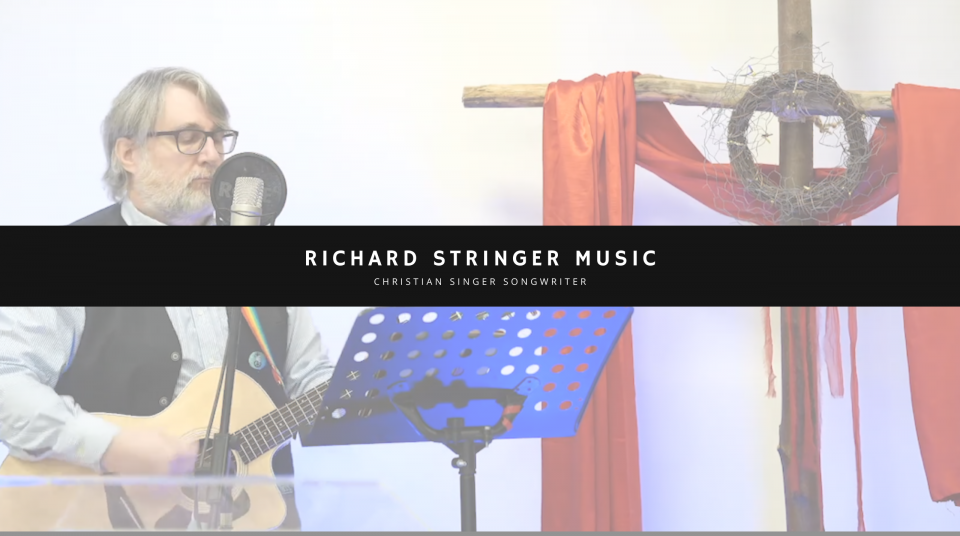
As Easter approaches, thoughts turn to the cross and what it means. One of the first songs I wrote that really stood out was Here at the Cross written in 2003. The first time we used it in church someone came up to me and asked whether I had really written the song. I felt quite insulted at the time but now I can look back at this and laugh because I didn’t have that much of a track record at the time.

I’ve done a bit of an analysis of the themes of the song where are explored below. I did use AI to help me in this.

In the song, I’ve tried to capture the profound essence of this pivotal moment, offering a window into the soul’s encounter with divine love and forgiveness at the foot of the cross.

It’s a place of reckoning, where the gravity of what has been done for us on the cross is laid bare. The imagery used—”I see my sin, I see my shame“—is not merely to evoke guilt but to bring us to a place of awareness. It’s here, in the stark light of my own failings, that the magnanimity of Christ’s sacrifice becomes evident. The price paid on the cross was not a transaction but a gift of such profound love and grace that it defies any attempt at recompense. This realisation that there is nothing we can say or do to earn this gift is the beginning of wisdom and the first step toward genuine freedom.

The chorus shifts our gaze from our unworthiness to the boundless generosity of God’s grace. The repeated phrases “The gift of your love, The gift of your peace, Forgiveness that’s full, Forgiveness that’s free” are like waves washing over the soul, each one declaring a different facet of the jewel of salvation. The chorus is a declaration of the new reality for those who stand at the cross: freedom from guilt, freedom from fear, and the astonishing truth that those who were once far off have been brought near. In these lines, we find the essence of the Gospel—a message not of condemnation but of reconciliation and restoration.

The imagery in the second and third verses, draws us closer to the physical reality of Christ’s suffering. The thorns, the spear—each a stark symbol of the cost of our freedom. Yet, even as we’re compelled to confront the brutality of the cross, we’re reminded that our response isn’t to run and hide but to stand in awe of the depth of Christ’s love for us. The final verse culminates in a declaration of liberation: “I know the truth you’ve set me free.” This is the transformative power of the cross to cleanse us from our past and inaugurate us into a new life of freedom and cleanliness.

“Here At The Cross” is more than a hymn; it is a theological narrative that guides the believer through a journey of self-discovery, repentance, and, ultimately, jubilation in the salvation offered through Jesus Christ. It encapsulates the essence of the Christian faith—the belief that at the cross, the most profound exchange took place: our sin for His righteousness, our shame for His glory, our bondage for His freedom.

In our contemporary world, where the message of the cross is often sanitized or obscured, “Here At The Cross” looks to serve as a reminder of the central truth of our faith. It invites us into a deeper engagement with the mystery of the cross, encouraging us to ponder anew what the Almighty can do in, with, and for us when we are anchored ‘here’ at the foot of the cross.
Here, here at the cross

Featured

Tags

,

A while ago, I took my music down from streaming platforms as I needed to redo the terms of the distributor I was using. I re-released Jesus, Son of David and King of Glory, but didn’t get round to re-releasing Here at the Cross so I am not finally doing that. You can find out more by following this link.

https://distrokid.com/hyperfollow/richardstringer/here-at-the-cross-2

Studio Demos 2010​-​12

Tags

, , ,

My Friend, Olwen Ringrose, from nearby Pontyclun, has released a new EP on Bandcamp. It contains five tracks she recorded as demos between 2010 and 2012 of songs which are all cracking song. She’s more of a singer/songwriter than a writer of congregational songs, but she does that as well. She’s also a team leader on this year’s 12 Song Challenge.

You can listen for free on Bandcamp and the tracks are available for download, for a contribution which you can set yourself. All the money made from this project is going towards the costs of recording her new 10 track album.

2024 12 Song challenge

This year’s 12 Song challenge is up and running, and I forgot to do a post about it at the start of January, so apologies for that.

The theme was gathering songs, in terms of gathering as the people of God and also gathering in the harvest of God’s kingdom. I went for the former and here is the result. You can listen to it here.

Come, Come as you are
Richard Stringer 2024
A section:
Come, come as you are
Instead of your sorrow
He’ll give you joy.

Come, come as you are
Receive His forgiveness
The price has been paid

B section:
By the blood of Jesus, we can see him face-to-face
To receive his mercy, to receive his grace.
And as we draw near to God
he’ll draw near to us
So come, [A] Come as you are

A Section 2:

Come, come as you are,
The weary and worn-out,
Come rest in his arms.
Come, come as you are,
The world and its heartache,
Were conquered by him.

A Section 3:

Come, come as you are
You are invited
His feast is prepared
Come, come as you are
Your table is waiting
So come as you are.

CCLI Song ID: 7233149

Welcome to retirement

Tags

,

Hi everyone, I hope you had a good break over the Christmas and New Year period, and whether you are into New Year’s resolutions or not, you are looking forward to spending time with God this year.

Somebody told me, many years ago, when retirement seemed a long way off, that nobody retires in the kingdom of God. Indeed, look at the Old Testament. You can see that Moses only really started to get going at the age of 500, and Abraham and Sarah began to be a family well past the age when we would consider it either sensible or possible.

In the New Testament, we see the example of Elizabeth and Zechariah, who were well past the age of bearing children when Elizabeth became pregnant with their son, John.

And in that tradition, whilst not looking to start a family, I have not retired looking just to put my feet up and do nothing. As well as the things that need doing in our new home, I am looking to fill my time with plenty of other activities. I want to spend more time being active, riding my bike, running regularly, and going for walks with my wife. And these things have started. I have even gone as far as entering for the Swansea half marathon, which takes place in June this year. Since moving, the longest I have run is 8 km, which I need to get up to 22 km for the race. It’s a challenge, but it’s one I can meet. I will be running for a charity, but more that in another post.

But more than anything, I wanted to spend more time writing songs and recording music together with writing fiction and books to help in the Christian life. After working day, I couldn’t find the energy for either of those, and this, more than anything, is the reason I retired.

So, there will be plenty to keep me occupied; the challenge will be to ensure that I take advantage of this additional time and produce fruit that will last. Because as Jesus said, “By their fruit, you will know them.” Matthew 7:16-20.

Moving to wales

Tags

,

I have lived in London with my wife since 1980 and we have now left London and moved to Swansea in South Wales. We are busy unpacking boxes and trying to find a place for everything. Hopefully, by the end of the week we will have unpacked everything and life will begin to settle down.

We have started looking for a new church and have begun looking locally as we would like to be in fellowship near to where we live if possible.

All my music stuff in now in the loft wating for the planned garden studio to come to fruition so I can get going again on writing and recording my music. In the meantime, I’ve got plenty to get on with, not least of which is my book on prayer.

So this is a new chapter of our lives and we are excited about what God is going to be doing in our lives.

The Heart Over Words: What Jesus Really Meant About Prayer

Tags

, , , ,

Have you ever felt somewhat lost in your prayer life? Maybe you’ve pondered, “Am I getting this right?” You’re certainly not alone in this. Even the earliest followers of Jesus had their questions about prayer. Fortunately, Jesus offered them—and us—some invaluable guidance. Let’s delve into Matthew 6:7 to discover the essence of meaningful prayer.

The Ancient Approach: Endless Repetition

Firstly, let’s set the context. In Matthew 6:7, Jesus states, “And when you pray, do not keep on babbling like pagans, for they think they will be heard because of their many words” (NIVUK). What exactly does Jesus mean by “babbling like pagans”?

In the era in which Jesus lived, there were many religious practices that involved reciting long, complex prayers to a multitude of gods. The idea was to say the ‘magic words’, perfectly articulated, to get the gods to do one’s bidding. It’s akin to treating deities like a vending machine: input the correct words, and out pops a blessing.

Why Endless Words Won’t Do

Jesus looked at this practice and said, “That’s not the way.” Why? Because the God of the Bible is not a vending machine waiting for the correct code. He’s more like a parent who knows what you need before you even ask (Matthew 6:8). Unlike the other gods people worshipped, the God of the Bible desires a relationship with you. He wishes for dialogue, not mere repetition of ornate words.

The Heart of the Matter: Connection Over Ritual

So, if repetitive prayers aren’t the answer, what is? The Lord’s Prayer (Matthew 6:9-13) shows us the way. It’s a concise prayer that touches on the essentials, like acknowledging God, seeking daily needs, and asking for His help to face the day. The aim is to engage God in a sincere conversation, much like you would with a close friend or family member.

Shifting from Quantity to Quality

The difference between repetitive prayers and praying as Jesus instructed is like the difference between fast food and a home-cooked meal. While fast food might fill you quickly, it’s not nutritious in the long run. On the other hand, a home-cooked meal is prepared with care and is much better for your well-being. Likewise, uttering many words in prayer may give you a short-lived sense of accomplishment, but ultimately, they will not draw you near to God. It is the quality of those words, and the relationship behind them, is what matters the most.

How to Engage in Genuine Prayer

So, how can you engage in meaningful prayer? Here are some quick pointers:

  • Be Real: There’s no need for complicated language. Speak to God as you would with a friend.
  • Be Open: Share your genuine thoughts and feelings. God already knows them, but he wants to hear them from you.
  • Be Brief: The Lord’s Prayer is brief and direct. Your prayers can be as well.
  • Be Receptive: Listen for God’s responses, which may come in various forms, like a sudden inspiration, a helpful individual, or a stunning sunset.

Conclusion

In Matthew 6:7, Jesus offers a profound lesson: prayer is not about stringing together the perfect phrases but about developing a genuine relationship with God. The next time you find yourself in prayer, avoid any pointless repetition. Opt for an honest, heartfelt dialogue with God. It’s the most effective way to forge a lasting, meaningful relationship and will yield lasting results.

Now that you’re equipped with insights into meaningful prayer, why not put it into practice? You may find it’s simpler—and more enriching—than you’ve ever thought possible.

Praying in Solitude: Why Your ‘Room’ Doesn’t Have to Be a Room

Tags

, , , ,

Matthew 6:5-8 NIV
“And when you pray, do not be like the hypocrites, for they love to pray standing in the synagogues and on the street corners to be seen by others. Truly I tell you, they have received their reward in full. But when you pray, go into your room, close the door and pray to your Father, who is unseen. Then your Father, who sees what is done in secret, will reward you. And when you pray, do not keep on babbling like pagans, for they think they will be heard because of their many words. Do not be like them, for your Father knows what you need before you ask him.”

I’ve been studying these scriptures in my ongoing research for the book on effective prayer strategies. My focus has been on the importance of personal prayer spaces and the value of solitude for a “meaningful prayer experience.”

While some may be blessed with a dedicated prayer room, others may not have such a physical space. The “room” mentioned by Jesus can be metaphorically seen as a quiet prayer corner, not necessarily a literal room.

Consider Susanna Wesley, the extraordinary mother of John and Charles Wesley. Despite her numerous responsibilities—raising 10 surviving children, managing a household, homeschooling, and even running a farm—she never compromised her “consistent prayer life.” Financial difficulties and community hostility didn’t deter her. She repurposed her kitchen apron to create a makeshift prayer sanctuary.

So, what are the key takeaways for effective prayer? The most important thing is to find a time and place to be alone with God, as Jesus instructs. This requires discipline and a protective attitude towards the time allocated for prayer. If a physical room isn’t available, consider alternative prayer locations like a garden spot, a park bench, or even your car during lunch breaks at work. The example of Susanna Wesley demonstrates both the necessity and the creativity required for a fruitful prayer life.

Therefore, if you haven’t yet found your personal prayer sanctuary, I encourage you to set this as a goal and defend it against all distractions.

What is Prayer?

Tags

,

I am writing a book on praying and am learning a lot as I dig deeper into what the Bible says about prayer. My starting point is straightforward: What is prayer?

There are many ways to describe prayer and many examples in the Bible. Prayer is the foundation on which God’s people, both in the Old and the New Testament, based their relationship with Him. Prayers prayed thousands of years ago still inspire and bless His people today.

I looked at how others defined prayer, and finding different examples and phrases was easy. I spent some time reading through them and the scriptures they referred to. After going through this process, these are the ones I chose.

It can be a time to share our feelings and worries with God.

“Cast all your anxiety on him because he cares for you.” 1 Peter 5:7. Knowing I have God to turn to when I am worried is a real blessing. I love the words ‘cast all’ because it speaks of throwing off all anxiety and letting him deal with it all.

A place where we can ask God for guidance and wisdom. “If any of you lacks wisdom, you should ask God, who gives generously to all without finding fault, and it will be given to you.” James 1:5. How many times during the day are we at a loss as to how to deal with something? It’s a great encouragement to say to God, ‘I don’t know how to deal with this; give me the wisdom I need, please.’

A safe place to admit our wrongs and ask for forgiveness. “If we confess our sins, he is faithful and just and will forgive us our sins and purify us from all unrighteousness.” 1 John 1:9. Sin and the guilt that comes with it can be a terrible burden. If we come to God, He will forgive our sins, and we can be unburdened.

It can be praying in the Spirit. “And pray in the Spirit on all occasions with all kinds of prayers and requests. With this in mind, be alert and always keep on praying for all the Lord’s people.” Ephesians 6:18.
Sometimes, we do not know how to pray, but we can pray in the Spirit. By using our prayer language, we don’t pray with our mind, but our spirit prays directly to God.

Take time today to reflect on what prayer means to you. It might be helpful to write it down and ask God to speak to you about what you have written. Write down any scriptures that come to mind, then pray them through. The next time you pray, allow them to shape how you pray.

God Chat: Rethinking the Way We Pray

Tags

, ,

I am writing a short book on prayer and the great thing about writing it is that I am learning so much as I unpack what the word of God says about prayer. Today I have been looking at the question, “What is prayer?”

One of the ways to look at prayer is to see it as having a chat with God.

Some might think, “Can we really chat with God like a friend?” Yes, we can. Remember, Jesus told us to think of God as Our Father, even calling Him “Abba Father”. I have a friend who starts her prayers with “Daddy God”. And better still, our God in heaven is different and even better than our real-life dads.

Let’s break down how to chat with God:

Talking: This is just like starting any chat. If you don’t know what to say, the Lord’s Prayer is a good place to start.

Listening: In any good chat, we listen as well as speak. So, in prayer, we should listen to what God might be saying. It’s good to find a quiet spot for this.

Replying: When we listen, we often want to answer back. Sometimes we’re keen like Mary, the mother of Jesus. Other times, like Zechariah (John the Baptist’s dad), we might doubt. Most of us feel both ways at different times.

Keep it Going: Think of it like talking to a good friend all the time. Anywhere, anytime.

Make it Yours: Every chat is unique, like every prayer. Your talk with God will be special, just for you.

Prayer isn’t just chatting though. We can also praise God, say sorry for our mistakes, and ask for help, both for others and ourselves. We’ll dive deeper into these parts in later chapters.

To sum up, next time you pray, picture it as a chat. Speak, listen, and enjoy the conversation.